


preprius
-
Posts
1,543 -
Joined
-
Last visited
-
Days Won
10
Content Type
Store
Profiles
How-To & Articles
Scroll Saw Reviews
Clubs & Organizations
Clubs & Organizations International
Pattern Shop
Suppliers
Village University
Help Desk
Forums
Gallery
eBooks
Everything posted by preprius
-

Hello on top of the Cumberland Plateau of TN
preprius replied to Garry Brpwine's topic in Introductions
Hi Garry: Welcome to the village. I have not heard of a tool that quickly identifies scroll saw blades. There are so many styles of blades now-a-days. Reverse tooth, Crown, double crown, double skip etc.. But maybe just take a known used blade and epoxy it to a board sharpie the size / teeth count on the board. It is great fun to do board to bowl. I feel bowls makes scrollsaw project more a daily useable project. It will be great to see some of your glue up bowls. They might take a bit longer than a lathe but it starts out with less wood and can be pretty and decorative. you can check my gallery and find the "how to " on this site. How to article. Me. Mark Eason -
Wow. There is many pieces in this project. I estimate about 40 pieces just on the big flipper. All those must be pretty small pieces since the project is only 6.5" high. Very well done. The spot (knot) under the neck is where the water from his shell soaked the sand. Very well placement of wood grain. Me. Mark Eason
- 7 replies
-
- 1
-

-
- intasia
- sea turtle
- (and 1 more)
-
The sad part is I had 36 blades in the pack. I had to go thru the whole pack to figure it out. But it was not all in the same project. probably 7 months between projects. Like you mentioned things that might give me a heads up is the angle of the cut just to go straight. That pack of blades was always different. Sad it took me so long to figure it out. Hope this post helps newbies.
-
I had a rare coincidence. Starting a project with "Wenge" 3/4" thick very hard wood, I never used before. So glued pattern down and started cutting with my favorite blade. Boy this is hard wood. it took me 1.5hr when normally takes me 45 min. I really questioned why I chose Wenge and if I should continue this project with this wood. I had to change blades 6 times. My pack of blades was down to 6 when i started. So i grabbed my 2nd pack of same blades. For the next line on the pattern. This pack just cut faster. I cut my pattern in 40 minutes. Only 2 blades were needed. Coincidence starting with very hard wood got me not to pay attention to possibly weak pack of mfg blades. I only experienced a weak mfg blade twice in 5yrs. 2 different mfg of blades. So a rare event so just be aware.
-
5 Reasons Scroll Saw Blades Break (And How to Prevent It)
preprius commented on Travis's article in Beginner's Corner
Travis, Yes you missed at least 1. When you thread the blade through the hole kinking the blade between wood and table will cause blade breakage. You mentioned pressure left or right will also cause overheating. I want to say this is especially important for thick material. If the bottom of the blade has to change angle because of side pressure, then the extra heat and metal fatigue causes breakage. This happened to me last week. I just took a break after cutting a .75" thick really hard wood called "Wenge" , 1970 Janka scale. I am doing precision cuts #3 Pegas MGT blades at 10 deg angle. Tracking the line at an angle with no side to side pressure is critical. Blades need to be change every 30 minutes. I went 45 min, 15 minutes too long. But no blade breaks. I examined the dull blade and noticed some teeth were bent up! Along with heat marks. Another note, listen to your saw. Noise differences will help you decide your doing something that might be wearing down the blade. -
Well after a few days i just cut out shrimp and glued them on. I selected the wood from scrap bin, grabbing various thicknesses. I did add orange tint to all shrimp. To make the fretwork stand out more I tinted the back board. Not quite painting the shrimp. 4.5 foot foot long about 5.5" high about 3/8" thick. The project is just ok. If I had to do it again i would lightly blue wash the back board.
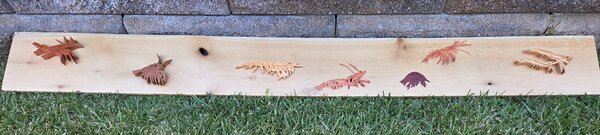
-
i have not made fretwork patterns before. Do the already cut out shrimp look ok? they could be ghost shrimp. yep that is a real name of a shrimp. since this board is longer than my 26" scrowsall I can not do a relief technique. i also plan to glue a couple of cutout on top of this board. Maybe I should just stop trying fretwork and just paint these 2 already cut an orange tint.
-
I have a board that is about 4.5 ft long. I attempted fretwork for shrimp. i am doubting myself after 2 of 6 shrimps. Do you think these look like shrimps? I just found pics and spray glued them on the board then traced hilights. I am making it for a restaurant that just opened. He needs better wall art. He opened up a fish place. He did not have any shrimp decorations. So I volunteered. Any suggestion to make it look like shrimp? Shown below is half of yhe 4.5 ft board.
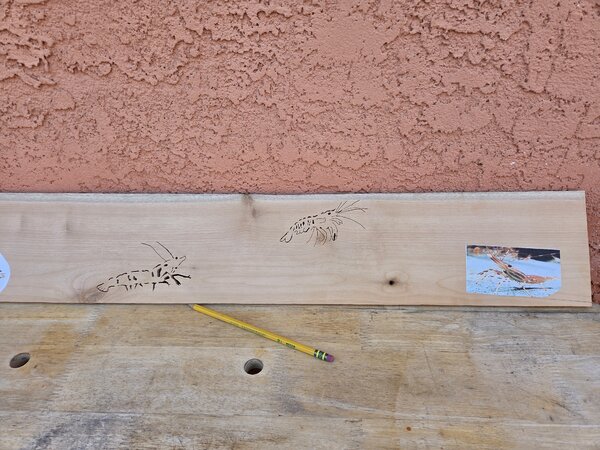
-
Bluedmoon, Welcome to the great village. We encourage questions, pictures, and bragging posts. We also like new scrollers so we can learn from them (you). Lots of folks here to help you with any struggles. Me. Mark Eason
-
Alex, very cool. The envelope is worth more than any notes you put in there. Me. Mark Eason
-
My task was to try hot wire. Not to actually use scrollsaw blade to cut foam. The hot wire works great, melts foam and operates in all directions similar to spiral blades.
-
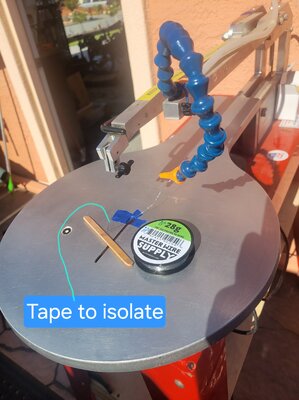
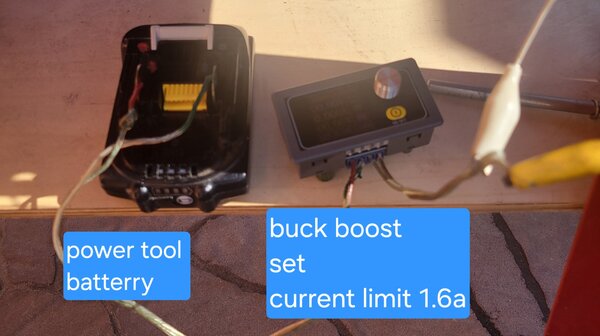
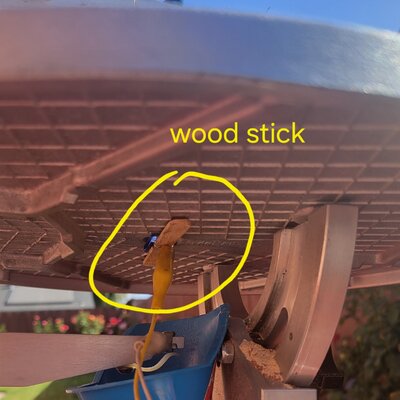
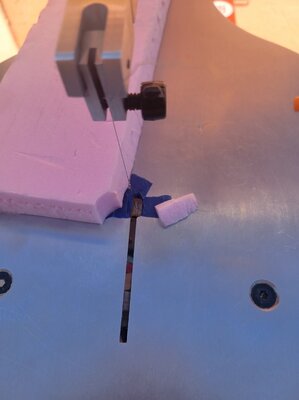
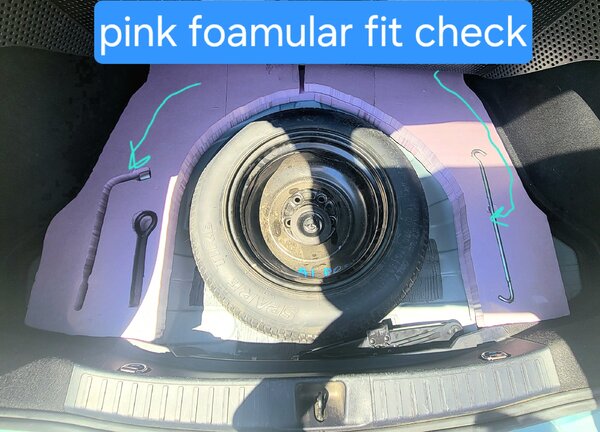
My 2016 car came with fix a flat instead of spare tire. So removed fix a flat stuff and put in spare donut. I had to fill the space around the tire for false floor. So I bought pink formular 1.5" boards to have 2 layers for a total 3". To cut foamular I wanted to try hot wire cutting. Below are pics of my scrollsaw methods. The wire was used as a blade. But the bottom blade holder was not used. I wrapped the wire around craft stick. To power the hot wire i used my power tool battery 18v to go to a buck boost controller. This $30 unit can be set for max current. I set it at 1.6 amps, after 1 amp did not get hot enough. Below pic shows bottom of scrollsaw table, wooden stick with hot wire mounted and connected. I used 2nd electrical clip to the chassis. So 12v 1.6 amps is flowing through to the upper wire clamp. No wires above the table. Next pic shows the test cut. Here is short movie of my neighbor Joe learning about hot wire cutting. 20250713_103556.mp4 Here is my end result fit check. Terrible picture. too many shadow areas.
-
Frank, Very well done. It look like you were thoughtful of the backer grain. It looks pretty close to bears nose, and grain lines that flows with the curves of the bear. Good job. That part of grain observation is intarsia. Segmentation is for sure seen, but the painting kinda covers up the intent of displaying grain in segmentation. Does this puzzle need to be assembled bottom up? This adds a teaching moment to the kiddos that other puzzles don't have. Ok, now for some humor. Why did you cut off the bears paws? A little touch of wheres waldo with the colored scarf. This demonstrats your having fun with this scrowsaw ability. You make it look so easy and smooth. Even during recovery from hand surgury. Me. Mark Eason
-
Hot Rods and Motor Bikes - Scroll Saw Challenge
preprius replied to Travis's topic in General Scroll Sawing
Who did the intarsia harley? not shown yet. -
Gordon Lightfoot/The Wreck of the Edmund Fitzgerald
preprius replied to Charlie E's topic in Bragging Rights
Nice story. I used to listen to this song a lot. Great idea and cutting. -
Peggy... Welcome to the village. there are lots of answers here. some opinions, and lots of creativity. Me. Mark Eason
-
this is a winner. i dont need to see the other entries.
-
yep this village is here to help. Me. Mark Eason , California
-
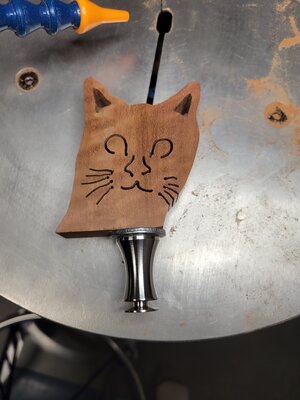
correct, bottle stoppers don't have to be round. Or can openers Or bottle openers


-
it is very ..... C o l o r f u l. nice work. Is every color a segment?
-
ok 1 other note. Black walnut hat brim. I purposely wore the curved brim in the rain several times. The curved brim went flat. Yikes.... Do I have to rebend the brim after it has been sealed???? So I just put it in the house on my desk. The next day it was back to the proper bent angle. I did not have to do anything. Me. Mark Eason
-
I order 1/8" wood from cherokee for all my cowboy hat brims. I butt glue 6" x24" together to make 18" x 24" then cut the flat brims. I ordered canarywood thinking some one would order a hat. I had the 3 planks sitting flat in my shelves on garage for 3 yrs NOT glued. It did cup a little bit. It did split a little bit. I used it 3 months ago and I struggled to get a good butt glue joint. 1/8" wood is not available in big widths. To butt joining them is interesting. I glue sandpaper to a known 90 deg surface. I have a flat quartz top to lay the 1/8" slat on. Then slide the 1/8" board back and forth against the 90 sandpaper, to make nice square edges. I use a needle glue applicator to one of the boards. Then I push boards together and add weights to hold both sides. This also keeps the slats flat on the quartz top. Too much glue will squeeze out causing more sanding later. Dont starve the joint but dont over glue it either. Problem with canarywood was solved by buying a new bottle of glue and ordering 3 more slats of canarywood. I think it was the old titebond 3 bottle of glue that was the cause. But I will only order 1/8" thick wood when I will use it within a week. Cherokee wraps it up so it won't absorb moisture. I did not store the canarywood wrapped up. Other woods I have ordered 1/8".... black walnut, maple, canarywood, red oak, padauk. Only 1 customer wanted a flat brim "red oak". Once the flat brim had protective finish on it it stayed flat. All other brims were purposely curved to about 35. degrees. Make sure the edges are sealed with protective finish. Me. Mark Eason
-
all those antlers are good for: napkin holders. stocking holders Christmas card display rack. Ring display ornament rack
-
Nice cutting. The labs are so cute. The right pup seems a bit distracted by the ducks in the water. The mothersday plaque has some nices smooth cuts. Nice contrast also.
-
it would be nice to have Bushton to publish thier serial log file on this site? Or their site again.


